STEMM Sisters On THe RISE: Madison Jefferson

July 8, 2025

At the intersection of mechanical engineering, environmental justice, and purpose-driven leadership stands Madison Jefferson — a dynamic student who is engineering a future that is authentic, innovative and  impactful. Check out this interview with Madison, a 2022 Celebrate Sisters Scholar.

A person smiling in front of a sign

AI-generated content may be incorrect.

Madison is a senior majoring in mechanical engineering at Mississippi State University.

Q: What moment made you say, “Yes, this is why I’m in STEMM”?
A: The Environmental Justice Academy program gave me the opportunity to create and teach my own coursework outlining the history of the environmental justice movement, while correlating how I can contribute to reducing carbon emissions as a mechanical engineer. This internship ended with me being able to travel to Washington D.C. to attend the National Environmental Justice conference. At this conference, I was given the opportunity to showcase my coursework and be surrounded by individuals rich in knowledge regarding saving our environment. The first course entitled, Environmental Justice: The Deterioration behind African American Communities, highlighted the connection between environmental justice and racial disparities in African American communities. The second course entitled, Mechanical Engineering Contribution to Environmental Justice, highlighted the connection between mechanical engineering and environmental justice. This internship allowed me to gain advanced facilitation, leadership, research, organizational, project management, and educational skills. This experience serves as a monumental moment for me because I was able to bridge the gap between my love for engineering and education. This is why I am in STEM: to help, to innovate, and to educate. 

A person holding a tag

AI-generated content may be incorrect.

Madison at the National Environmental Justice Conference in Washington D.C. where she presented her coursework completed in Pre-College University’s Environmental Justice Academy.

Q: How did you explore or deepen your interest in your STEM field this year?
A: Throughout this year, I completed a project in Mechanics of Machinery on the mechanism of planetary gear sets. Engineers utilize planetary gears to increase or decrease speed and torque. Planetary gear sets include a sun gear, planet gears, a ring gear, and a carrier. Within this project, my team and I developed a prototype of a planetary gear set in SolidWorks CAD, which is a software used to produce computer-aided designs for models. This project explored the interworking of various systems that utilize planetary gear sets, often seen in vehicles; I highlighted this project because of my interest in the automotive industry.

A black gear with silver and silver gears

AI-generated content may be incorrect.

A prototype Planetary gear set designed by Madison and teammates on SolidWorks CAD and 3D-printe

Q: What was the hardest lesson you learned this year, and how did you grow through it?
A: It may sound cliché, but being authentically myself is the hardest lesson I learned this year. I have grown in a world surrounded by different opinions, backgrounds, strengths and weaknesses, and mindsets. Looking back on this year, there were times when I walked into rooms and felt like an imposter, and the desire to prove my worth was overwhelming. Thankfully, I learned that proving myself was not necessary. In college, questions like “Who am I?” and “Who do I aspire to become?” often crowd my mind as I strive to find my identity, which is an important milestone to me. Because I am a Christ follower, I know that my identity is found in Christ, not in academia or achievements. One may wonder what keeps me grounded, and the answer simply put is God. So, what helped me grow through this lesson was my prayer and devotion time with God, my source. I realized that being authentically myself required staying connected to my source, which I achieved through intentional engagement with the Christian community on campus and consistent personal devotion. 

Q: How did you protect or prioritize your well-being during stressful seasons? (Self-care strategies, support systems, boundaries, rest, etc.)
A: In stressful seasons, like during final exams season, I usually create personalized schedules for each week with activities separated by day and times. Each day, I list out my tasks, including thirty-minute breaks; in each thirty minute break, I dance. Yes, I dance to all kinds of music, particularly music that makes me jump and laugh. In my junior year, I read a book that scientifically proved that exercise during study breaks helps you retain information more effectively. Another way I decompress during breaks is by sketching and drawing portraits; I particularly enjoy sketching my friends and family as a hobby. One last way that I enjoy my breaks is by meeting up with friends and going to campus organization meetings. As an engineering student, I focus on repetition when studying by completing practice problems repetitively until I can visualize the problem in my mind. By focusing on certain classwork on certain days, I allow myself to compartmentalize all of the material in a way that helps me retain loads of information. The most important day of the week to me is Sunday, which is reserved as my rest day; Sunday is especially important to me during final exams season and overall stressful seasons. 

Q: How did you stay on track academically? 
A: I stay on track academically by prioritizing my time according to the difficulty level of each individual course. Every course requires time and commitment; however, I do feel it is important to prioritize each course accordingly. In the beginning of each semester, I study the syllabus and course schedules of each course, write down all of my test or project dates, and list them in order. By doing this, I am able to plan and prioritize my time based on the order of assignments and test dates. I am also able to determine how many study hours I will need for each course based on the difficulty level and assignment due dates. 

Q: In what ways were you engaged on campus?
A: I am involved in National Society of Black Engineers (NSBE), which hosts campus events like study nights, game nights, and informational nights focused on professional development. I am also involved in Chi Alpha’s life groups, which provides Christian students with a space on campus to be surrounded by like-minded individuals and live life together. Another organization I was involved in was IDEAL woman, which provides young women with a space for professional development, community, and leadership skills.

A group of people in a classroom

AI-generated content may be incorrect.

Madison attending Mississippi State’s Chi Alpha life group meeting.

Q: How did you show up for your community—at school, home, or beyond?
A: My way of showing up for my community is through education. This has been a passion of mine since middle school, in which I developed two National History Day websites highlighting Katherine Johnson, a famous mathematician, and Henrietta Lacks, a medical phenomenon. Similarly, in college, I was given the opportunity to create and teach my own coursework centering around environmental justice; the objective was to provide an understanding of the connection between environmental justice, history, and mechanical engineering. As an Education and Media intern, I was given the opportunity to conduct research, design flyers, and highlight the hidden stories of Black American women, particularly in STEMM (Science, Technology, Engineering, Mathematics, and Medicine) fields. By doing this, my community was educated on various subject matters, helping to further deepen their understanding of the importance of advocacy, education, and history. 

Q: Where did you stretch your leadership muscles, and where do you want to grow next?
A: My leadership muscles were stretched as an Education and Media Intern for Celebrate Sisters Foundation; I managed content creation projects, including developing a content calendar, researching women to feature, designing themed flyers, and writing captivating captions. The process was pretty tedious, requiring time, discipline, and commitment. With the mentorship and guidance of Dr. Ja’Wanda Grant, I was able to successfully complete all of my tasks in timely manners. During this experience, my understanding of taking initiative, advocating for myself, and prioritizing my time was deepened. 

Click here to view Madison’s educational Instagram reel featuring the story of Henrietta Lacks.

Q: Who were your biggest supporters this year—mentors, peers, family, faculty?
A: One of my biggest supporters was my mom, Demiracle Jefferson, who helped me through all of my stressful seasons by providing me with advice, support, and a listening ear. Another supporter I would like to acknowledge was Dr. Ja’Wanda Grant, whom I view as my mentor, who provided me with advice, support, and mentorship. Two other supporters I would like to acknowledge were my Chi Alpha life group leaders, Tomyah Reeves and Destiny Owah, who provided me with advice, support, and friendship. 

Q: What’s one thing you would say to yourself as if you were your own mentor or cheerleader?
A:
“Be who you were created to be, and if you do not know who that is, find out.” – Madison Jefferson

Q: What song should we add to our “STEMpower Playlist” to celebrate you and your journey?
A: “The Best Is Yet to Come” – Donald Lawrence & The Tri-City Singers

How to EARN a 4.0 – A First Year Student Reflection

A college student standing in a green outdoor area, smiling while wearing a white shirt and blue jeans, with flowers in the foreground.

Amiracle Hardy (2024 Bridge to STEM Scholar) is a rising sophomore and Spring 2025 Presidential Scholar in the Honors College at the University of South Alabama. After completing a year in college and finishing out the year with a 4.0, we asked Amiracle to share her 4.0 secrets with rising first year students.

When people think about academic success, they often assume intelligence is the key factor. However, after years of experience, I’ve learned that success in academics isn’t just about IQ; it’s about effort, discipline, and a willingness to adapt.

If only showing up to class guaranteed an A! College is a world of its own, where professors won’t constantly remind you to do your work, and classes don’t follow the same predictable routine as high school. Without structured accountability, it’s easy to let studying slip through the cracks. And let’s be honest: between making friends, adjusting to independence, and soaking up new experiences, textbooks can feel like a burden rather than a priority.

Yet, balance is everything. Ignoring schoolwork for fun will catch up with you eventually, but losing yourself in studies without making time for life outside academics is just as risky. The key is finding the middle ground that works for you. This starts with being intentional about how you approach your time, commitments, and study habits.

One strategy that changed everything for me was intentional scheduling. Instead of hoping I’d remember deadlines or relying on last-minute study sessions, I took control of my time. I began by writing down all my assignments, tests, and quizzes in a planner or a digital tool like Google Calendar. This helped me visualize my workload for the upcoming weeks, so nothing caught me off guard. I also planned specific times throughout the week to study and work on upcoming assignments. Rather than cramming the night before exams, I blocked off dedicated study periods each week. Sometimes, these were short sessions—just 30 minutes of reviewing material—but the consistency made a huge difference.

Academics are important, but maintaining a healthy personal life is equally crucial. I carved out weekends for friends, self-care, and relaxation to ensure I had time to recharge outside of academics. This boosted my productivity and reduced the potential risk of burnout.

Five young women posing together on a staircase, dressed in elegant evening gowns in various colors, smiling and celebrating.

Another crucial lesson I learned is that you don’t have to do it all. College is overflowing with clubs, events, and activities, making it tempting to say yes to everything. However, stretching yourself too thin will only lead to exhaustion. Focus on what truly matters to you and plan around those priorities. Sometimes, saying no is the best thing you can do because academic success isn’t just about studying hard; it’s about protecting your time and staying mentally balanced.

At times, studying can feel overwhelming. Where do you even start? In high school, I barely studied. I skimmed notes here and there but never put in consistent effort. When I got to college, I struggled. I didn’t know how to take notes effectively, prepare for exams, or even what studying truly meant. Through trial and error, I found a system that worked for me. Instead of passively reading textbooks, I tried methods like self-quizzing, summarizing concepts in my own words, and creating study guides tailored to my struggles. There’s nothing wrong with seeking help; colleges offer free tutoring, so don’t hesitate to use your resources. I went to tutoring a couple of times, and I found it very helpful. Study groups are also beneficial if the group shares the same goals and effectively studies together. Professors also have office hours where you can get one-on-one help, so don’t be afraid to ask for assistance. College is full of resources—take advantage of them!

As a STEM student, my courses were packed with math and science subjects that required a strong conceptual understanding. Whenever I didn’t grasp something in class, I watched detailed YouTube explanations, used study apps, and practiced problems until I felt confident. Memorization might help in the short term, but for subjects that require deeper comprehension, like calculus or organic chemistry, I focused on breaking down concepts until they truly clicked. When I understood the material, tests and quizzes felt far less daunting.

My biggest encouragement is to find what works for you. There is no one-size-fits-all study method. Some people thrive with visual learning, while others need hands-on practice or discussion-based study groups. Experiment with different techniques until you discover what helps you retain knowledge most effectively.

One important thing we often forget, especially in college, is to take time to celebrate our achievements, big or small. Time moves quickly when you’re juggling deadlines, so don’t forget to pause and recognize what you’ve accomplished. Even the smallest victories, like showing up to class after a rough night, deserve acknowledgment. Bigger milestones, like acing a tough exam or winning an academic award, deserve even more celebration.

Personally, I like to treat myself when I complete something significant. Whether it’s grabbing ice cream, getting my nails done, or simply reflecting on my progress at the end of a long week, those intentional moments of celebration boost my motivation to keep going. 

Two smiling women pose together at a Mobile Symphony Orchestra event, each holding a program for the 2022-2023 season. They stand in front of a backdrop featuring the orchestra's logo.

Academic success is about strategy, not perfection. If you want to level up your academic game, start with structure. Be intentional about how you spend your time, be strategic in balancing school and social life, and most importantly, give yourself grace because success isn’t just about studying hard; it’s about living fully.

 #GirlsInSTEM #AcademicSuccess #STEMEducation #CollegeLife #StudentSuccess

celebrate sisters awards $7k in scholarships!

June 9, 2025

Dear Community Supporters, Celebrate Sisters Alumnae and Friends:


We are thrilled to share that Celebrate Sisters Foundation has recently awarded $7000 in scholarships to girls in STEM from Mississippi.  Celebrate Sisters Foundation embarked on this journey in 2017, awarding a $500 scholarship to a graduating senior from the MS/LA Gulf Coast and hosting monthly mentoring Saturdays.

09/30/2017: Celebrate Sisters Dining Etiquette Brunch for girls 12 and up.Thanks to your continued support and participation, we have been able to steadily grow our programs and our reach.

06/07/2025: Bridge to STEM Scholar Roundtable to celebrate new scholars, past scholar accomplishments, and network with women in STEM from the MS Coast.

While the scholarship eligibility this year covered the entire state of Mississippi, the MS Gulf Coast applicants came in strong!  It was not an easy decision in selecting the award recipients, which is a testament to your support in helping us share the scholarship opportunity with extremely bright young scholars.

We are grateful to our Board of Directors for support in selecting the scholars, community sponsors (Keesler Federal Credit Union and Mississippi Power) for financial support, and school administrators and teachers for support in applicant recruitment and submissions. 
In addition to receiving scholarship funding, new scholars are joining a vibrant and supportive community of past scholars and alumnae (Celebrate Sisters College Edition). 

08/10/2024: Virtual Bridge to STEM Scholarship and Awards Ceremony post event ‘networking’ with College Edition members.

It has been our pleasure to give back in our community and we are gearing up to continue this work with even greater impact in the days to come.

With sincere gratitude,

Ja’Wanda S. Grant, PhD & Ja’Larna J. Grant, MD

Founders

Celebrate Sisters Foundation 

Mentorship • Sisterhood • Leadership

TO DONATE

Help us reach our 2025 fundraising goal of $8000!  Every contribution helps chip away at the increasing price tag of a STEM degree. Thank you for helping us move the needle. Join our donor community with a monthly recurring gift of any size, one-time gifts, or by gifts check. Visit here for details. 

STAY CONNECTED

Follow-us on Instagram and Facebook to learn more and stay connected!

Meet the 2025 Scholarship Recipients

BRIDGE TO STEM SCHOLARSHIP WINNER 

  Asia Martin ($4,000) – Ocean Springs High School, Destination: Tuskegee University (Health Science)

Asia Martin with Ocean Springs Mayor (Kenny Holloway), Celebrate Sisters Board Treasurer (Judy Grant), and 2024 Bridge to STEM Scholarship Winner (Amiracle Hardy – University of South Alabama Honors College)

HONORABLE MENTION SCHOLARS  

Alexis “Lexie” Griffith ($1000) – Long Beach High School, Destination: University of Central Florida (Computer Science)

 Layla Razo ($1000) – Biloxi High School, Destination: University of Mississippi (Mathematics)

Layla Razo with founders, Dr. Ja’Larna Grant Walton (MD) and Dr. Ja’Wanda Grant (PhD).

Christina Smokes ($1000) – Gulfport High School, Destination – Cornell University (Human Biology, Health and Society)

Christina Smokes with Board Treasurers, Mrs. Judy Grant.

We Still Have Work To Do!

Opinion Column by Kayla McCray

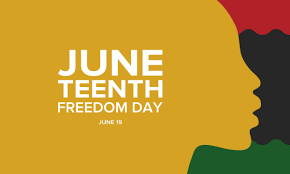
As we close out the observance of July 4 or Independence Day, mentee Kayla McCray reflects on Juneteenth, Black Independence Day.

BLOG ENTRY 2

July 5, 2021

We Still Have Work To Do!

With President Biden finally making Juneteenth a federal holiday, it was all over social media with pages dedicating entire posts to this powerful holiday. Even areas like D.C. and New Jersey had events to celebrate. But you may be wondering what Juneteenth is and why it is such a big deal. Considering many African American people have made this holiday their July 4th, it is extremely important that you understand the history of this event, even if it is not a part of your culture. 

Juneteenth was originally celebrated in Texas on June 19, 1866. Although the Emancipation Proclamation on January 1, 18632  declared freedom of slaves in ten states, most enslaved African Americans in Texas did not learn they were freed until almost three years later. On June 19 in Galveston Bay, Texas, 2,000 Union Troops declared slaves were free by executive decree. This allowed over 250,000 enslaved black people to be free creating the historic day known as Juneteenth. In 1979, Texas became the first and only state to make Juneteenth an official holiday. Fortunately, on June 17, 2021, President Biden made it a national federal holiday.

Although it was a historical day, there was slight outrage amidst the celebrations. Most people are aware of the hundreds of years of oppression that black people have faced in America. From slavery to facing discrimination and microaggressions in the workplace, the black community has had to put up with a lot. Asian hate crimes also spiked to new levels with some connections to the coronavirus, but President Biden quickly created an Anti-Asian Hate Bill.  Many black people will always be excited about Juneteenth becoming a federal holiday but underneath there is also disappointment. We have yet to see an Anti-Black Hate bill even though we have faced levels of oppression unlike other groups. It looks like black people are now good enough to have Juneteenth as a federal holiday, but not good enough to have a bill put in place to protect us. In spite of this progress, just remember we still have work to do!  

Kinks, Curls and Swirls

Welcome to Kinks, Curls and Swirls, a blog series for girls by girls.

Contributors: Members of the Healthy Girls Alliance

Editors: Dr. Ja’Wanda S. Grant & Dr. Ja’Larna J. Grant

BLOG ENTRY 1

December 12, 2020

Mental Health Misery and Social Media Influences, by Khalia McCray

Black People, Younger Users, Democrats More Likely to Turn to Social  Platforms for Activism

 In today’s society, many people battle with mental, physical, and emotional health issues. Life has its battles in general, but because of the pandemic and the divide in our country, our health is under attack. We have to ask ourselves what can keep our mind, body, and spirit in the right place. I feel that social media can have a major influence on our health . 

Approximately 3.81 billion people use social media in 2020. Social media gives us the chance to not only connect with people, but can also help us know what those people like and do. It also helps keep us in tune with everything that is going on in the world, but is that a good or bad thing? In my opinion, it’s both good and bad because not only can it bring us joy and excitement but it can also bring us sadness and grief. 

There are a lot of things going on in the world and some things we cannot handle to see constantly on social media. For example, police brutality has become a bigger problem than ever before. It feels like there is a black life taken every month due to police brutality. I know for me, that is not something I can handle hearing about so I try to stay away from it. Even though that may be a negative part of it, the positive part is seeing people of different races come together to fight for what’s right. There is nothing wrong with staying in tune with what is going on in the world; it is just important to know what you handle and what you cannot handle.

Not only does social media affect our mental health,  it also affects our physical health. I know 99% of people can agree with me when I say that social media is very addictive. Clicking on a social media app when you have something important to do can be the biggest mistake you make. Not only does it trap your mind into what’s going on but it also causes you to lose focus on the more important things. For example, sleeping, eating, exercising, and just practicing good hygiene are all important things to do. Although, sometimes we get so distracted on social media to the point that we either don’t do these things or we lack in these areas. 

Staying up until 4:00 am  in the morning is not good for your physical health because we need at least seven hours of sleep a day. Social media also promotes false beauty standards and expectations. The edited photos can make someone feel like they are not pretty enough compared to other women they may see. These feelings can make someone start bad eating habits so they can look “better” when in reality there is no such thing as a perfect body. Disregarding our physical being for a late-night scroll can come back to bite us in the butt. If your emotional health is not in the best state then social media may not be for you. 

Depression, anxiety, and addiction seem to be a “trending” issue these days. These are serious matters affecting the lives of many people in the world today. Instead of dealing with it in therapy or talking about it, we often use social media as a coping mechanism. Avoiding the problem instead of facing it has become a very common thing. Running from our problems or our fears of facing those problems will not solve anything. In my opinion, social media has caused us to see these things as a ”joke”. We have taken a serious matter and turned it into a laughing matter which is not ok. It has become a toxic outlet for those who suffer from emotional dysfunction. I also feel like it mocks those who genuinely are struggling with an emotional issue and it has to stop. Taking time out of your day to meditate or exercise is very important for your emotional health. Sometimes, just sitting or laying outside in the grass, soaking up the sun, can help you emotionally. 

In conclusion, social media is an exciting part of our lives to help us connect and stay connected to people. It is also a place for us to learn new things, but we still need balance in our life. We cannot let it consume us and change who we are. Making sure your mental, physical, and emotional health is more important than scrolling on social media. There is a whole world beyond the screen on your phone.